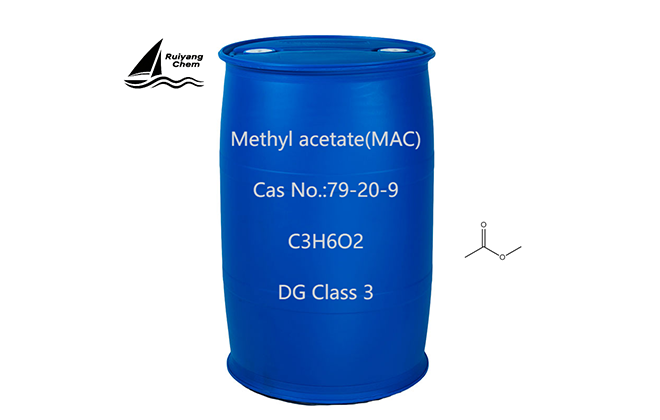
Methyl acetate (CH₃COOCH₃) is a lightweight ester-based oxygenated solvent widely used across coatings, adhesives, inks, cleaning formulations, and chemical processing industries. It is valued for its fast evaporation rate, balanced solvency behavior, and formulation flexibility, making it a useful component in systems where drying speed and surface quality are critical.
The global methyl acetate market is estimated to be in the hundreds of millions of USD range, with moderate but steady growth supported by expanding downstream industrial demand, increasing adoption of low-VOC solvent systems, and continued manufacturing expansion in Asia-Pacific economies.
The methyl acetate (CAS No 79 20 9) market is considered a mid-scale segment within oxygenated solvents, closely tied to industrial production cycles and formulation innovation in coatings and chemical processing.
Asia-Pacific is the dominant consumption region, accounting for a significant share of global demand. China and India serve as key production and consumption hubs due to their strong chemical manufacturing bases and large downstream industries.
Rather than being a highly volatile growth market, methyl acetate demonstrates stable, structurally supported demand, driven by mature but expanding application sectors.
The development of the methyl acetate market is shaped by both industrial expansion and regulatory trends.
Key factors include:
Growth in coatings, paints, and industrial adhesives
Increasing demand for low-VOC and fast-evaporating solvent systems
Expansion of pharmaceutical and fine chemical manufacturing
Gradual substitution away from higher-toxicity or more regulated solvents in selected applications
These drivers collectively support consistent long-term demand rather than rapid cyclical growth.
Methyl acetate is widely used in applications requiring rapid evaporation and controlled solvency performance, especially where surface finish and drying time are critical.
Major application areas include:
Industrial coatings and printing inks
Adhesive and resin systems
Cleaning and degreasing formulations
Chemical synthesis and intermediate processing
Among these, coatings and adhesives represent a major portion of consumption, although actual shares vary by region and formulation type. Overall demand is more balanced across multiple industrial segments rather than concentrated in a single end-use.
From a formulation perspective, methyl acetate is one of the most versatile acetate solvents, offering a combination of moderate polarity and fast evaporation kinetics, making it suitable for systems requiring controlled drying profiles.
Its key advantages include:
Low boiling point (~56.9°C), enabling fast drying
Moderate water solubility, allowing flexible formulation behavior
Good compatibility with a wide range of resins and polymers
Efficient solvent removal in industrial processing systems
Because of these properties, it is often selected when formulators need to balance drying speed, surface finish quality, and solvent system stability.
Methyl acetate is classified as a volatile organic compound (VOC) and a flammable liquid, requiring appropriate industrial handling and storage practices.
Key safety considerations include:
Low flash point (high flammability risk)
Requirement for proper ventilation and explosion-proof equipment
Generally low acute toxicity under controlled exposure conditions
Compliance with regulatory frameworks such as EPA and OSHA guidelines in the United States, and equivalent regulations in other regions
In industrial environments, safe handling practices are primarily focused on flammability control rather than toxicity concerns.
The methyl acetate market is expected to maintain steady, incremental growth over the long term.
Key future trends include:
Continued shift toward low-VOC solvent systems
Expansion of manufacturing activity in Asia-Pacific
Gradual optimization of coating and adhesive formulations
Ongoing substitution of more hazardous or regulated solvents in niche applications
Rather than rapid expansion, the market is characterized by stable demand growth aligned with industrial production cycles.
Factor | Overview |
Market Type | Mid-scale oxygenated solvent |
Growth Pattern | Stable, moderate growth |
Key Region | Asia-Pacific (China, India) |
Main Industries | Coatings, adhesives, chemicals, pharmaceuticals |
Core Function | Fast-evaporating formulation solvent |
What is methyl acetate used for?
It is primarily used as a solvent in coatings, adhesives, inks, cleaning formulations, and chemical processing applications.
Why is methyl acetate used in coatings?
Because of its fast evaporation rate and good resin compatibility, it helps improve drying speed and surface finish quality.
Is methyl acetate toxic?
It has relatively low acute toxicity under controlled industrial conditions but is highly flammable and must be handled properly.
Can methyl acetate replace acetone?
It may partially overlap with acetone in some coating applications, but they differ significantly in polarity and solvency strength.
Which industries consume the most methyl acetate?
Coatings, adhesives, chemical manufacturing, and selected pharmaceutical processes.
Methyl acetate remains an important industrial solvent in modern chemical manufacturing due to its fast evaporation characteristics and versatile solvency behavior. While not a high-growth specialty chemical, it benefits from stable demand across coatings, adhesives, and chemical processing industries.
The long-term outlook is supported by continued industrial expansion in Asia-Pacific and the ongoing transition toward lower-VOC solvent systems.
For consistent industrial-grade supply and technical formulation support, Ruiyang Chemical provides solvent solutions tailored for coatings, extraction, and chemical processing applications.



 English